Market research methods for AI startups: signals first
Summary
For AI startup operators, market research methods divide into signal-based and conversation-based approaches. Signal-based methods covering funding databases, hiring board scans, and ProductHunt monitoring give fast quantifiable reads on competitive moves. Conversation-based methods covering structured problem interviews and behavioral telemetry surface unmet needs. The failure mode most founders hit is running these in the wrong order, defaulting to surveys before a 20-minute database scan has answered the question.
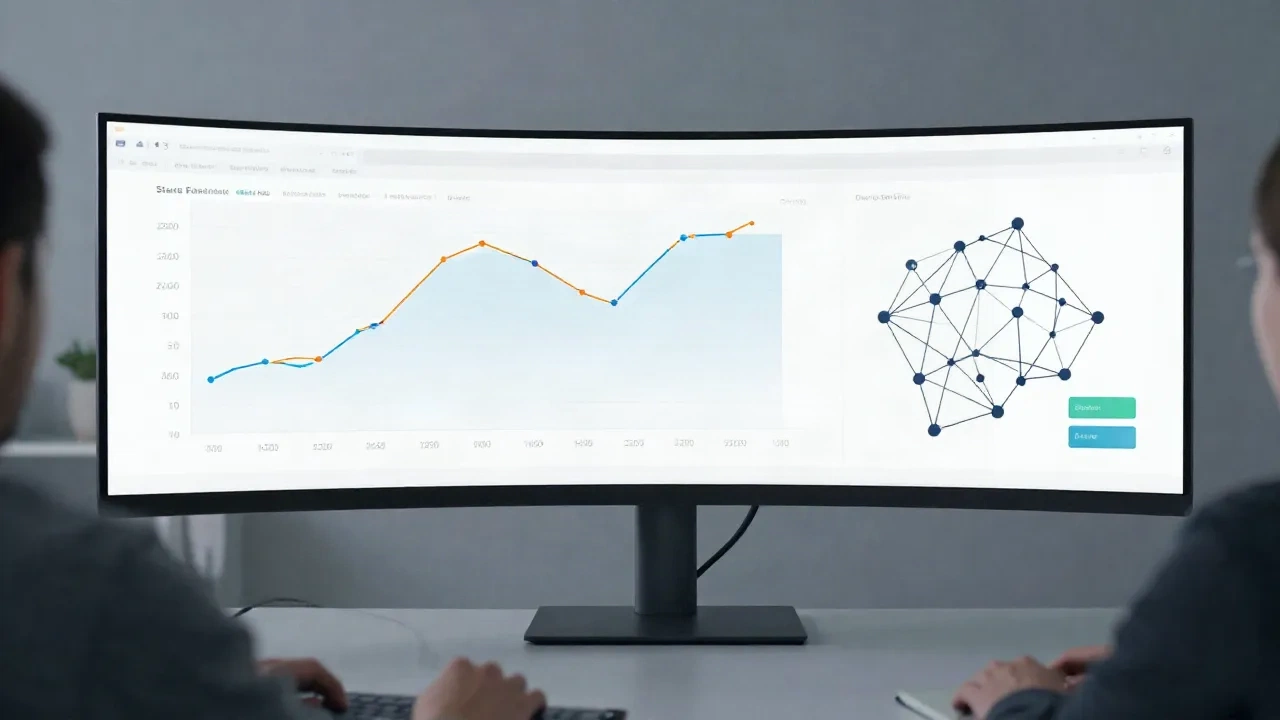
Market research methods for AI startup operators divide into two categories: signal-based (funding databases, hiring boards, ProductHunt launches) and conversation-based (structured problem interviews). Signal-based methods give quantifiable, fast reads on competitive moves and market structure, often in hours, not weeks. Conversation-based methods surface unmet needs your competitors have not indexed yet. Most founder guides invert this sequence, defaulting to surveys first. That sequence does not work for AI-native operators, and this piece explains why.
Why standard market research methods fail AI startup operators
The canonical market research curriculum, surveys, focus groups, secondary reports, was designed for consumer brands with 18-month product cycles. For AI startups operating on 6-week sprints, the failure mode is structural: by the time survey data is cleaned and segmented, the competitive signal it was meant to inform has already moved.
42% of startups cite no market need as their primary failure reason. That number is not a research problem; it is a sequence problem. Most founders who run into it did do research. They ran the wrong type at the wrong stage. They validated a solution instead of mapping the problem space. The methods matter, but so does the order.
The secondary research default, Gartner reports, Forrester quadrants, IBISWorld summaries, compounds the problem. These reports are often 6 to 18 months out of date at publication. Using them to answer what is the competition doing this quarter is a latency mismatch, not a methodology choice.
The structural fix is not to run more research; it is to run the right research in the right order. Signal-based methods first, to establish what is observable in the market right now. Conversation-based methods second, to surface what is not yet observable. Survey-based methods last, to validate a specific product decision after the opportunity is already mapped.
Signal-based methods your competitors are underusing
Signal-based market research methods aggregate observable behavior: what operators, investors, and hiring managers actually do, rather than what survey respondents say they would do.
The three highest-signal sources for AI startup research:
Funding database scans
Filter Crunchbase Pro, Dealroom, or Tracxn by vertical (for example, AI agents in B2B SaaS), stage (Seed to Series B), and recency (trailing 30 days). The output is not narrative; it is a delta. Which sub-verticals received capital last week that did not the week before? Which lead investors moved from infrastructure bets to application-layer bets? The delta is the signal; the absolute number is context.
Hiring board monitoring
A startup's job description corpus is its declared strategy, two quarters out. A team adding ML infrastructure roles while cutting sales headcount is signaling a product pivot before any press release. LinkedIn Talent Insights and Otta provide the data. The analysis takes 20 minutes if you track the right columns.
ProductHunt and community launches
Not as a trend-spotting tool, but as a willingness-to-pay proxy. A product that launches with 800 upvotes and converts 3% of its waitlist to paid within 7 days is providing a market signal no survey can replicate: revealed preference, not stated preference. Cross-reference with the founding team's history to assess signal quality.
Database-driven research: the method most guides skip
Most market research methods articles spend 80% of their content on surveys and interviews. They give one paragraph to secondary research, and within that paragraph they cite Google Trends.
For AI startup operators, the actionable secondary research stack is different:
Crunchbase Pro for funding coverage and investor network mapping
CB Insights for deal volume trends by sub-vertical
Dealroom for EU and APAC early-stage coverage that Crunchbase under-indexes
LinkedIn Sales Navigator for organizational change signals: headcount shifts, exec moves
The common objection is cost. Crunchbase Pro runs $299 per month; PitchBook exceeds $30,000 per year. The answer depends on what question you are answering. For TAM estimation in a pitch deck, a 14-day trial is sufficient. For ongoing competitive monitoring, $299 per month is defensible if it replaces two analyst hours per week. That math closes at any run rate above $50,000 ARR.
Qualitative methods that work for AI B2B: structured problem interviews
Qualitative market research for AI startups is not focus groups. Focus groups surface group consensus, which is the least actionable output for founders trying to find the problem no one has solved yet.
The method that works is structured problem interviews: 12 to 15 interviews with participants who match your target operator profile. The interview structure covers three questions:
Walk me through the last time you tried to solve this problem. What triggered it?
What did you try first? What did you try when that failed?
What would a resolved version of that workflow look like, not a product description, a workflow outcome?
The analysis output is not themes; it is frequency distributions. If 9 of 12 operators describe the same failure point in step 2, for example the data was 30 days stale by the time we got the report, that failure point is a market opportunity with a quantifiable signal. If 3 of 12 describe it, it is noise.
Median time-to-insight with AI-assisted interview analysis has dropped from 21 days to under 48 hours. That shift does not resolve any methodological debate; it makes the method viable for startup sprints where it previously was not.

Latency is a method choice, not a data-quality problem
The most underrated dimension in market research method selection is data latency: the gap between when a market event occurs and when your research method surfaces it.
Funding database (Crunchbase, Dealroom): 1 to 14-day latency. Use for competitive intelligence.
Hiring board scan: Real-time. Use for strategic signaling.
Industry report (Gartner, Forrester): 6 to 18-month latency. Use for TAM sizing only.
Customer survey: 2 to 6-week latency. Use for product validation.
Problem interview: 2 to 4-week latency. Use for opportunity discovery.
ProductHunt monitoring: Real-time. Use as willingness-to-pay proxy.
The implication for method selection is direct: market research methods are not interchangeable, and the choice of method is also a choice of acceptable intelligence lag. Selecting a 6-month-old Gartner report to answer a question about current competitive positioning is not a secondary research decision; it is a latency mismatch. The method needs to match the question's time sensitivity.
For AI startup operators running weekly competitive reviews, the right stack is hiring board scans and funding database alerts. Surveys are for product validation, not competitive monitoring.

The confirmation bias trap: why user surveys measure the wrong thing
Most B2B SaaS founders run their first user survey to validate what they have already built. The result is confirmation bias embedded at the methodological level: you are asking customers to evaluate a solution you designed, not to describe a problem you have not solved yet.
The cleaner method is behavioral telemetry in PLG trials. What percentage of trial users reach the activation event, typically the first successful output, within 24 hours? What is the activation-to-retention ratio at day 7? These are market research data points. They tell you whether the problem you solved is real, whether your solution resolves it efficiently, and whether the workflow fits the operator's environment.
Surveys measure what users think. Telemetry measures what users do. For AI-native products where the workflow is novel and users have no prior mental model to reference, behavioral data outperforms stated preference data by a margin that compounds over successive product iterations.
A weekly tracking cadence that combines all three layers
The synthesis is a cadence, not a single methodology. Here is the operational structure:
Weekly signal layer: 20-minute database scan on Crunchbase Pro filtered to target vertical, trailing 7 days. Hiring board pull on 3 to 5 target competitors, checking for structural job description changes. ProductHunt digest for launches in category, with upvote-to-waitlist conversion where available.
Monthly conversation layer: 2 to 4 structured problem interviews with operators in ICP. Review of behavioral telemetry from PLG trial cohort, focusing on activation-to-retention delta.
Quarterly structure layer: Secondary research refresh including industry reports, analyst briefings, and pricing index review. TAM and SAM recalibration based on the quarter's funding and hiring delta.
This cadence is the difference between a team that responds to a competitor's product pivot in two weeks and one that discovers it in the next board deck. The data is available; the cadence is the missing piece.
One signal that no standard market research method captures
One honest caveat: no market research method captures regulatory risk with sufficient latency. EU AI Act Article 6 classification criteria, NIST AI Risk Management Framework updates, and equivalent regulatory instruments move faster than any secondary research infrastructure can index. The operators who caught the EU AI Act's operational implications early were not running better database scans; they were reading primary sources directly, the official OJEU texts, not the editorial summaries.
Build one direct channel to regulatory primary sources into your market research stack. It does not appear in any market research textbook, but for AI startup operators in 2026, it is the gap that separates informed product strategy from reactive compliance scrambling.