AI Agent Examples: What's Actually Running in Production
Summary
AI agents are in production across finance, healthcare, retail, and B2B software. These ai agent examples, from Block's fraud detection to Lotus's 3,000-store retail intelligence, share a common structural pattern: proprietary data grounding, evaluation harnesses built before deployment, and explicit governance layers. Most pilots stall on exactly those three gaps. The delta between demo and production is the only number that matters for operators making agent investment decisions in 2026.
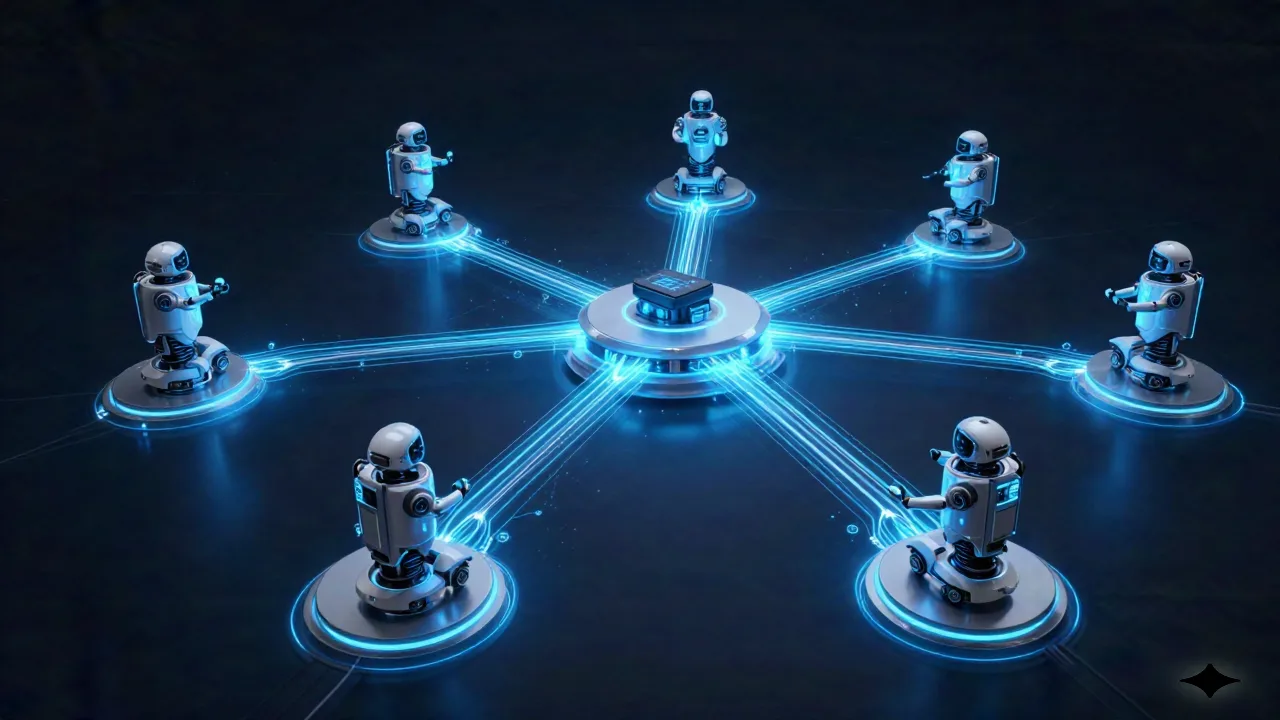
AI agents are no longer prototype demos. As of mid-2026, the segment counts hundreds of production deployments across finance, healthcare, retail, and enterprise software, each one a discrete example of autonomous goal-pursuit, not assisted task completion. This article maps the most instructive ai agent examples by vertical, extracts the structural signal behind each deployment, and identifies the patterns that distinguish production-grade agents from the still-large cohort of pilots that never ship.
The delta between "running a demo" and "running an agent in prod" is the only number that matters for operators evaluating where to place their next engineering bet.
What Makes an AI Agent Different from an Automated Workflow
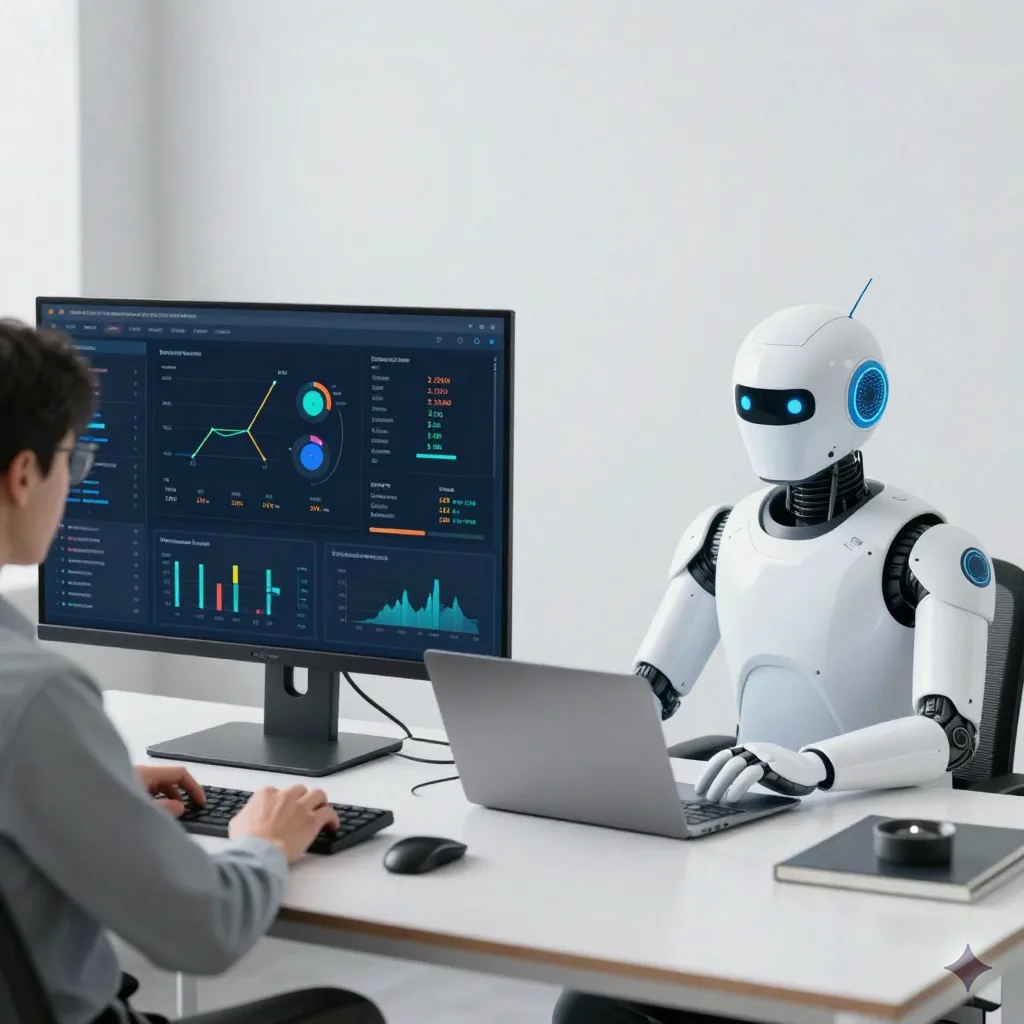
Most automation is conditional logic: if X, execute Y. An AI agent adds three capabilities that conditional logic does not have: memory across steps, goal-directed planning, and the ability to call external tools or other agents to resolve sub-problems.
That distinction matters operationally. A standard ETL job fails on an unexpected schema and stops. An agent notices the mismatch, checks the data dictionary, reformats, and continues, or escalates if the reformatting confidence is below threshold.
The taxonomy that practitioners actually use in production breaks down to five types, ranked by complexity of deployment:
Simple reflex agents: respond to current inputs via rule sets. Email routing, basic alert handling. Low engineering cost, low failure surface.
Model-based agents: maintain an internal state model. Inventory management, network anomaly detection. Medium cost, need state-persistence infrastructure.
Goal-based agents: plan multi-step sequences toward an objective. Project scheduling, code generation pipelines. High cost, require evaluation harnesses.
Utility-based agents: optimize across competing objectives simultaneously. Dynamic pricing, portfolio balancing. Highest cost, need utility function calibration.
Learning agents: improve from feedback loops. Fraud detection, recommendation engines. Highest long-term value, slowest time-to-production.
Most B2B deployments in 2026 cluster at goal-based and utility-based, the two types where LLM reasoning adds the most incremental value over classical automation.
AI Agent Examples in Financial Services: Where the Stakes Are Highest
Financial services lead adoption partly because the ROI of a working agent is unambiguous and partly because the regulatory pressure to document decision chains is compatible with the audit trails agents naturally produce.
Fraud detection agents represent the most mature category. Block (formerly Square) deployed learning agents on their transaction graph that flag anomalies in real time and adapt to new fraud patterns without full model retraining. The signal shift was a 40% reduction in false-positive rates compared to their previous rule-based system, a meaningful margin improvement on a billion-transaction volume.
Trading and risk agents occupy the next tier. Utility-based agents balance return targets, volatility limits, liquidity constraints, and regulatory capital thresholds simultaneously. At major quant funds, these are not novelties, they are the execution layer. The interesting 2026 data point: the median check size for AI agent startups in the fintech vertical was up 40% year-over-year in seed rounds, according to Databricks' production deployment data, a signal that capital is following deployment maturity.
Credit scoring and loan decisioning agents are the category where human-in-the-loop design matters most. Regulatory requirements in the EU and US mandate explainability, which makes pure black-box agents non-deployable. The architecture that works: an agent proposes, a rules engine ratifies, a human audits edge cases. The agent handles 95% of cases autonomously; the remaining 5% route to reviewers.
Skip if you are evaluating: any financial agent vendor that cannot produce an audit trail per decision. That is a compliance failure waiting to become a regulatory one.

AI Agent Examples in Healthcare: Triage, Diagnostics, and Care Coordination
Healthcare deployments differ from financial ones in a critical structural way: the cost of a false negative (missing a condition) is asymmetrically higher than a false positive. Agent architectures in healthcare therefore bias toward surfacing more, not fewer, candidates for human review.
Triage and scheduling agents process patient symptom reports, assess urgency against clinical guidelines, and route cases, either booking an appointment, escalating to a nurse line, or directing to emergency services. The operational value is shift-level: a triage agent running overnight for a 500-bed hospital handles intake that would otherwise require three full-time staff.
Medical imaging analysis agents function as model-based reflex agents on radiology and pathology workflows. They maintain an internal model of normal versus abnormal findings, flag anomalies, and prioritize the queue for radiologists. The measurable outcome is throughput: a radiologist reviewing AI-prioritized queues processes 30-40% more studies per shift compared to unstructured queues.
Care coordination agents are the most complex healthcare category, multi-agent systems where a scheduling agent, a medication reminder agent, and a care-gap detection agent coordinate to keep chronic care patients on protocol between visits. GreenLight Biosciences' AdaptiveFilters deployment is a representative example: domain-specific agents filtering large biological datasets so researchers surface relevant signals faster.
Worth the investment if: you have structured EHR data and the engineering capacity to build governance layers. An agent running on unstructured clinical notes without a validation harness is not a product, it is a liability.
AI Agent Examples in Retail and Supply Chain: Speed at Scale
Retail is where the multi-agent coordination pattern has the most visible ROI. The coordination problem, thousands of SKUs, dozens of warehouses, real-time demand shifts, is exactly the class of problem that multi-agent systems outperform single-model approaches on.
Product recommendation agents are the most widely deployed category across the consumer internet. These learning agents analyze behavioral signals, contextualize them against inventory availability and margin targets, and generate personalized surfaces in under 50ms. The Lotus's deployment (Southeast Asia retailer, 3,000+ stores) is a clean benchmark: natural language query agents surface operational insights to store managers without requiring SQL skills or analyst intermediaries.
Dynamic pricing agents operate as utility-based systems balancing revenue per unit, inventory clearance velocity, and competitive positioning. The operational cadence is continuous rather than daily, pricing decisions on perishable or time-sensitive inventory are now generated every 15 minutes in some deployments.
Supply chain coordination agents are the highest-complexity retail deployment. Multiple agents, demand forecasting, supplier communication, logistics routing, warehouse allocation, run in parallel and hand off data at defined checkpoints. The failure mode to watch: agent coordination overhead grows non-linearly with the number of agents. Deployments with more than seven agents in a single workflow consistently report latency and error propagation problems.
Multi-Agent Systems: The Architecture Behind the Largest Deployments
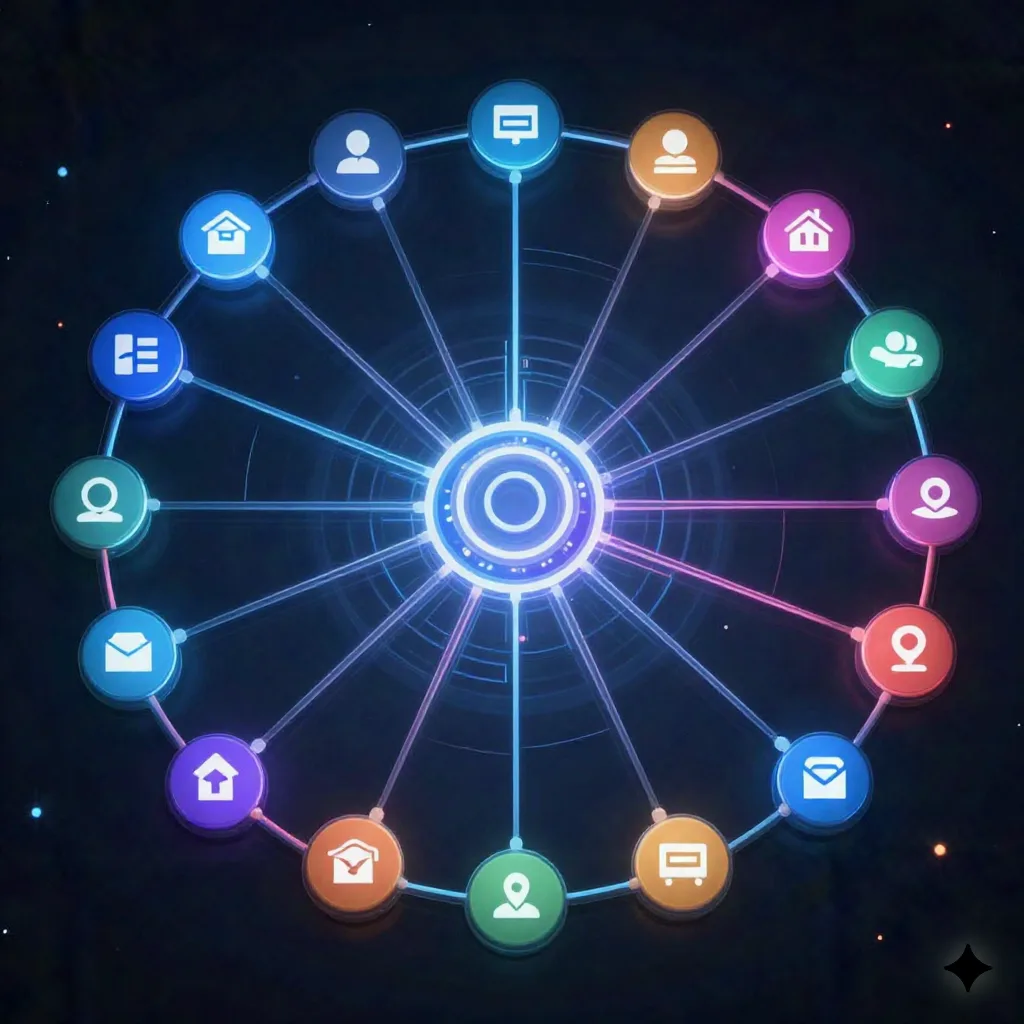
Single agents handle well-defined tasks. Multi-agent systems handle workflows where different subtasks require different capabilities, and where parallel execution reduces latency that sequential processing cannot.
The two coordination models in production use:
Hierarchical: a coordinator agent decomposes a task, routes sub-tasks to specialist agents, aggregates outputs, and returns a unified result. Edmunds' multi-agent AI ecosystem on Databricks Agent Bricks is a published example, each agent specializes in a piece of the automotive research workflow, with handoffs defined at the architectural level. The coordinator ensures consistency; the specialists ensure domain accuracy.
Peer-to-peer: agents negotiate directly, share intermediate outputs, and validate each other's results without central control. This model scales better but is harder to debug, tracing an error through a peer-to-peer mesh requires robust logging that most infrastructure teams underestimate.
The production signal from 2026 deployments: hierarchical systems reach production faster; peer-to-peer systems perform better at scale once the logging infrastructure matures. Organizations deploying agents for the first time should default to hierarchical.
What most listicles miss here: the coordination protocol is as important as the agent capability. A team of excellent agents with a weak handoff protocol will underperform a team of average agents with a robust one. Operators evaluating multi-agent vendors should ask specifically about how agent outputs are validated before being passed downstream.
AI Agent Examples in Startup Tooling: Where Founders and Operators Are Building
The most tractable ai agent examples for founders are not the Google Cloud or Databricks enterprise deployments, those require data infrastructure that takes 18 months to build. The tractable category is agent tooling that sits on top of existing SaaS data.
Research and synthesis agents are the fastest-growing category in B2B SaaS. They connect to knowledge bases, pull relevant documents, synthesize across sources, and return structured outputs, replacing workflows that previously required an analyst to run manually. You.com's research platform is the canonical public example: retrieval agents, reasoning agents, and generation agents coordinated to return cited, multi-source answers.
Meeting intelligence agents record, transcribe, extract action items, and route follow-up tasks to the appropriate team member without manual input. The delta from a traditional transcript: the agent does not just capture what was said; it identifies what was decided and what needs to happen next.
Code and development agents are the category with the highest satisfaction scores among technical founders. Goal-based agents that break down feature requests into implementation steps, write tests, execute the tests, and iterate on failures are saving engineering teams 4-8 hours per feature cycle. The measurable signal: median time from spec to first passing test dropped 60% in engineering teams running coding agents, according to internal benchmarks from several Series A companies.
Worth watching: the gap between what a coding agent can do in isolation and what it can do with a well-structured codebase context. Agents working on repos with strong documentation and consistent naming conventions outperform those working on legacy code by a factor of 3-5x on task completion rates.
What Separates Production-Grade Agents from Pilots That Never Scale
85% of global enterprises report using generative AI, but the majority of agent initiatives remain in pilot. The structural reasons, from the deployments that did scale:
Data grounding is the rate-limiting variable. Agents trained on generic knowledge produce fluent, often wrong outputs when applied to domain-specific tasks. The deployments that scale ground agents in proprietary data, internal databases, product catalogs, CRM exports, before they are tested on real workflows.
Evaluation harnesses must be built before deployment, not after. Every production deployment reviewed here had an evaluation framework, automated test sets, human review queues, output quality dashboards, before the first user session. The pilots that failed deployed first and built evaluation later. By the time quality problems surfaced, the internal perception of the agent was already negative.
Governance is not a compliance checkbox, it is an architectural constraint. Agents that take actions with real-world consequences (moving money, sending communications, modifying records) need explicit approval layers, audit trails, and rollback mechanisms. The deployments that skipped this step in the name of shipping speed spent 3-6x the time on incident remediation.
The signal to extract: the operational maturity of an AI agent deployment correlates more with the quality of the surrounding infrastructure, data pipelines, evaluation harnesses, governance layers, than with the capability of the underlying model.
The Operator Read on Where AI Agents Are Headed in H2 2026
The funding data from Q1-Q2 2026 shows two concentrations: agentic infrastructure (memory, orchestration, evaluation tooling) and vertical-specific agents (legal, healthcare, financial services). The horizontal "AI assistant for everything" category is compressing, not because the technology does not work, but because the go-to-market is too broad to convert.
For operators evaluating agents right now: the highest-ROI deployments are in workflows where the current state is a human doing the same 15-step process every day, the inputs are structured, and the output is a document or a decision that can be validated against a ground truth. That is the pattern that moves from pilot to production in under 90 days.
The agents that stay in pilot share a different profile: unstructured inputs, ambiguous success criteria, no evaluation framework, and a governance conversation that was deferred to "after we prove value." The proof of value never comes because the output quality never stabilizes.
Signals, not narratives.