Manus AI Alternatives 2026: 3 Agents Worth Testing
Summary
TL;DR: the Manus AI alternatives worth testing in 2026 are Genspark, Skywork, and ChatGPT's Agent mode. Manus still runs the deepest unattended tasks, Wide Research fans a job across parallel sub-agents and 20 concurrent tasks, but its December 2025 acquisition by Meta and thin free tier are pushing operators to line up backups. Genspark's 200-credit daily free tier and purpose-built output agents make it the strongest general swap-in. Skywork specializes in research-backed reports and decks. ChatGPT's Agent mode fits teams already paying for Plus but caps usage below Manus's throughput.
Manus AI alternatives are getting real search volume for a specific reason: Manus's parent company, Butterfly Effect, was acquired by Meta in December 2025, and its per-task credit pricing makes cost hard to predict before a run finishes.
Manus still runs the deepest autonomous tasks of the group: Wide Research fans a job across parallel sub-agents and finishes with a real file, not a chat reply. But Manus is now owned by Meta after its December 2025 acquisition, and its thin free tier pushes cost-conscious operators to line up a backup. Among the three alternatives compared here, Genspark is the strongest general swap-in on price and output polish. Skywork wins specifically for research-backed reports and decks.
Why operators are testing Manus AI alternatives now
Manus, built by Butterfly Effect (Monica) in Singapore, executes multi-step tasks end to end from inside a virtual browser and terminal: research, file generation, website builds, and autonomous browsing, all from one prompt. In December 2025, Meta acquired the company in a deal reported north of $2 billion. Reuters and CNBC both confirmed the entity has no remaining Chinese ownership or operations post-close.
That ownership shift is not, by itself, a reason to leave. The more concrete operational trigger is Manus's credit system: task cost scales with complexity and is genuinely hard to estimate before a job completes, and the free allowance is thin for anyone running Manus daily. Teams are testing alternatives to have a second option lined up, not because the product regressed.
How we compared
We checked each vendor's published pricing and documentation pages, cross-referenced independent roundups (Vellum, Lindy, and Storyflow all publish current Manus-alternative comparisons), and captured one homepage screenshot per product directly from the vendor's own site in July 2026. Manus's acquisition timeline was verified against Reuters and CNBC reporting from December 2025, not a single blog post.
This is desk research triangulated across public sources, not a timed hands-on benchmark run inside each tool. We're flagging that limitation directly rather than implying lab testing that did not happen; the criteria table below reflects published specs and documented behavior, not a stopwatch.
Two names we ruled out of the main comparison
Two other tools come up constantly in Manus threads and are worth naming even though they did not make the four-way table. Replit Agent is narrower by design: it builds and deploys full-stack code, which overlaps with Manus only on the "autonomous multi-step execution" trait, not on research or document output, so it answers a different question than "what replaces Manus." OpenManus, an open-source project that replicates parts of Manus's browser-and-terminal agent loop, is the closest thing to a self-hosted Manus, but it lacks Wide Research's parallelization and needs real setup work, which puts it outside the "operator picks a product today" framing of this comparison.
The three alternatives, by use case
Genspark routes each request to a purpose-built agent, called a Sparkpage, instead of one generalist model: slides, spreadsheets, reports, and images each get their own pipeline. The free tier refreshes 200 credits daily with no card required, which is the most usable no-cost option in this set. The Plus plan is $24.99 a month, or $19.99 a month billed annually, for 10,000 credits and 50GB of storage. Multi-hour autonomous research chains are less mature here than Manus's Wide Research, and per-task credit cost stays invisible until a job finishes, same complaint operators have about Manus itself.
Skywork is narrower on purpose: seven specialized agents cover documents, slide decks, spreadsheets, websites, video, and podcasts, all reachable from one login. Its Deep Research slide mode cites real sources from Google Scholar and Wikipedia rather than generating filler text, which matters for anyone producing reports that need to survive a fact-check. Pricing starts near $12 to $16 a month on the Pro tier, the cheapest entry point of the group. It does not attempt Manus's open-ended web-browsing autonomy, and its website-generation output is MVP-quality rather than a Webflow or Framer replacement.
ChatGPT's Agent mode is the path of least resistance for teams already paying for Plus at $20 a month: Agent mode operates a virtual browser and terminal for multi-step tasks such as form-filling and data gathering, and the user can interrupt and redirect mid-task. It inherits frontier model updates automatically, with no separate product to track. The trade-off is a usage cap even on Plus; sustained autonomous workflows push users toward the $200-a-month Pro tier, and browser automation here is newer and less tested on complex multi-app jobs than the purpose-built agents above.
What the criteria table shows
Line up price against autonomy depth and a pattern holds: the closer a product gets to Manus's unattended, multi-step autonomy, the more it costs at the top tier (ChatGPT Pro at $200/month, Manus's highest credit tier). The cheaper entries, Skywork and Genspark's free plan, are strongest when the job is a defined deliverable (a report, a deck, a spreadsheet) rather than an open-ended browsing task. Team and governance features also split along the same line: Manus and ChatGPT publish Team/Enterprise and admin-console detail; Genspark and Skywork are still individual-first products with less public compliance documentation.
Signal to retain
Pick Manus when the job genuinely needs unattended, multi-app autonomy and the credit cost is worth it. Pick Genspark first if cost and output polish matter more than raw autonomy. Reach for Skywork specifically when the deliverable is a research-backed report or deck. Default to ChatGPT's Agent mode only if the team already pays for Plus and the task is occasional, not core to the workflow.
At-a-glance
| Genspark | Skywork | ChatGPT | |
|---|---|---|---|
| Price | Free (200 credits/day) + Plus $24.99/mo, $19.99/mo billed annually | Free tier + Pro plan near $12-16/mo (annual pricing available) | Free + Plus $20/mo + Pro $200/mo |
| Primary use case | Multi-format workspace: slides, docs, images, video, and code via specialized agents | Workspace agent focused on reports, slide decks, spreadsheets, and websites | Chat-first assistant with Agent mode layered in for occasional autonomous tasks |
| Autonomy depth | Medium-high: Super Agent handles multi-step tasks, browsing, and calls | Medium: one agent per output type, less built for open-ended browsing | Medium: Agent mode caps usage even on Plus, interrupt-and-redirect model |
| Concurrent tasks | Not published; daily credit cap governs throughput | Not published; single-task workspace flow | Not published; Agent mode sessions run sequentially per conversation |
| Team features | Pro/Enterprise tiers with shared seats | Individual-first; team pricing on request | Business/Enterprise per-seat pricing, admin console |
| Ownership / governance | Independently operated; limited public compliance detail | Skywork AI Pte Ltd, Singapore; limited public compliance detail | OpenAI; publishes SOC 2 and enterprise admin controls |
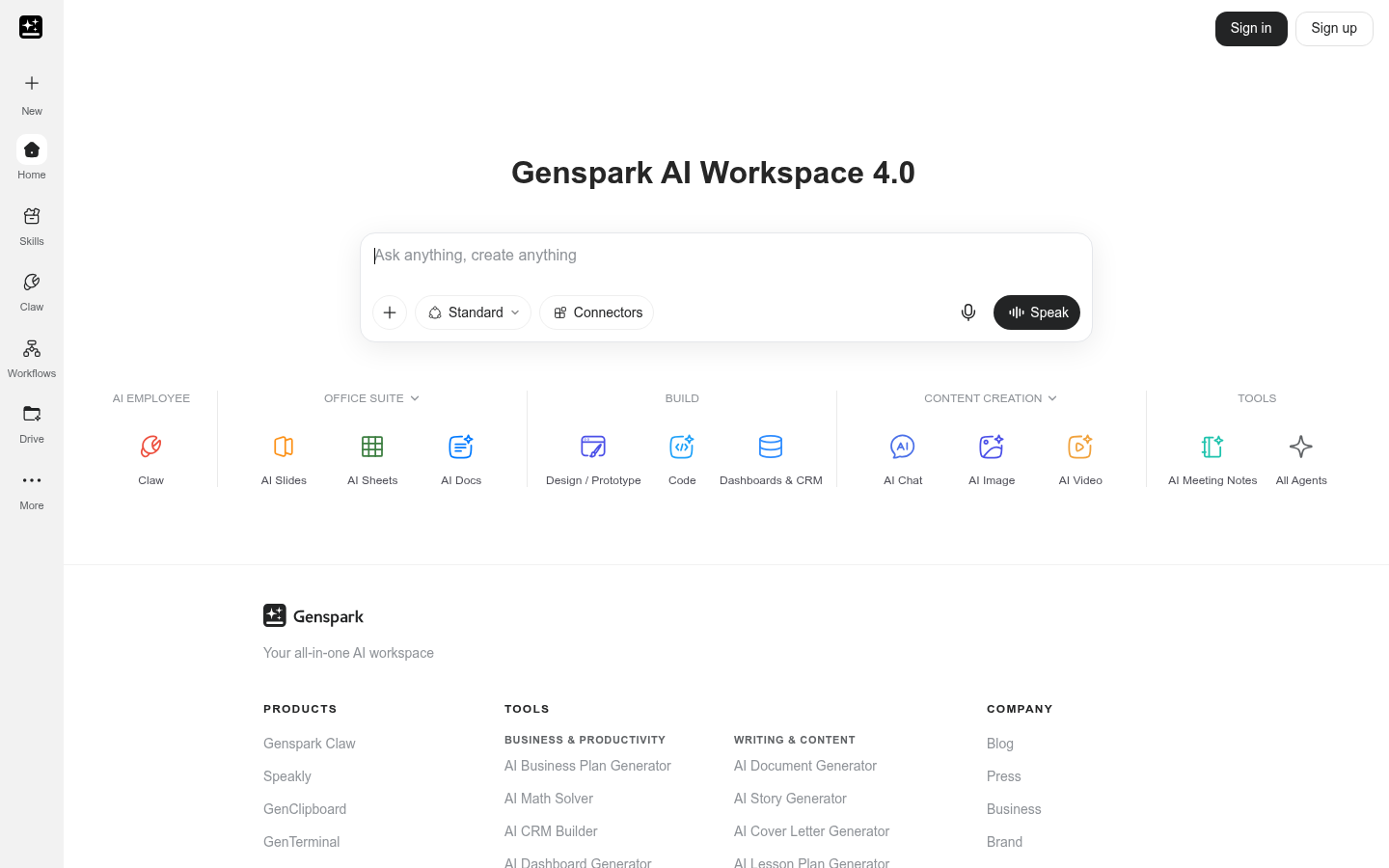
Genspark
- 200 credits/day free tier with no card required to start
- Purpose-built agent per output type produces cleaner slides and docs than one generalist model
- Transparent published pricing with an annual discount
- Multi-hour autonomous research chains are less mature than Manus's Wide Research
- Per-task credit cost stays invisible until the job completes
The most defensible general swap-in for Manus on cost and output polish, if unattended multi-hour runs aren't the job.
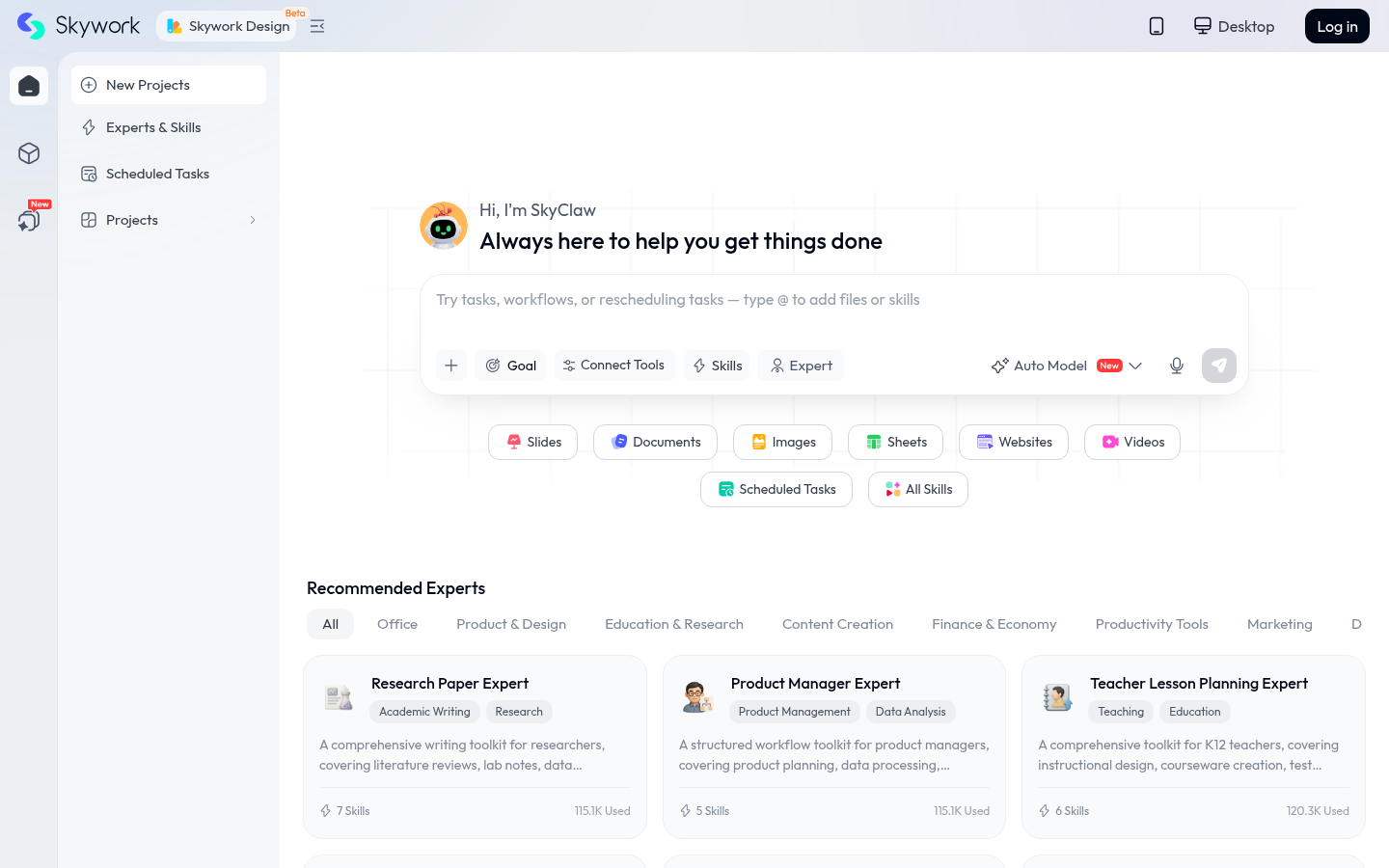
Skywork
- Deep Research slide mode cites real sources (Scholar, Wikipedia), not generic filler
- Seven specialized agents cover docs, slides, sheets, sites, video, and podcasts in one login
- Pro tier starts near $12-16/month, the cheapest paid entry point in this comparison
- Narrower than Manus outside document and workspace generation; no general web-browsing agent
- Website generation is MVP-quality, not a Webflow or Framer replacement
The specialist pick when the deliverable is a report, deck, or spreadsheet rather than an open-ended browsing task.
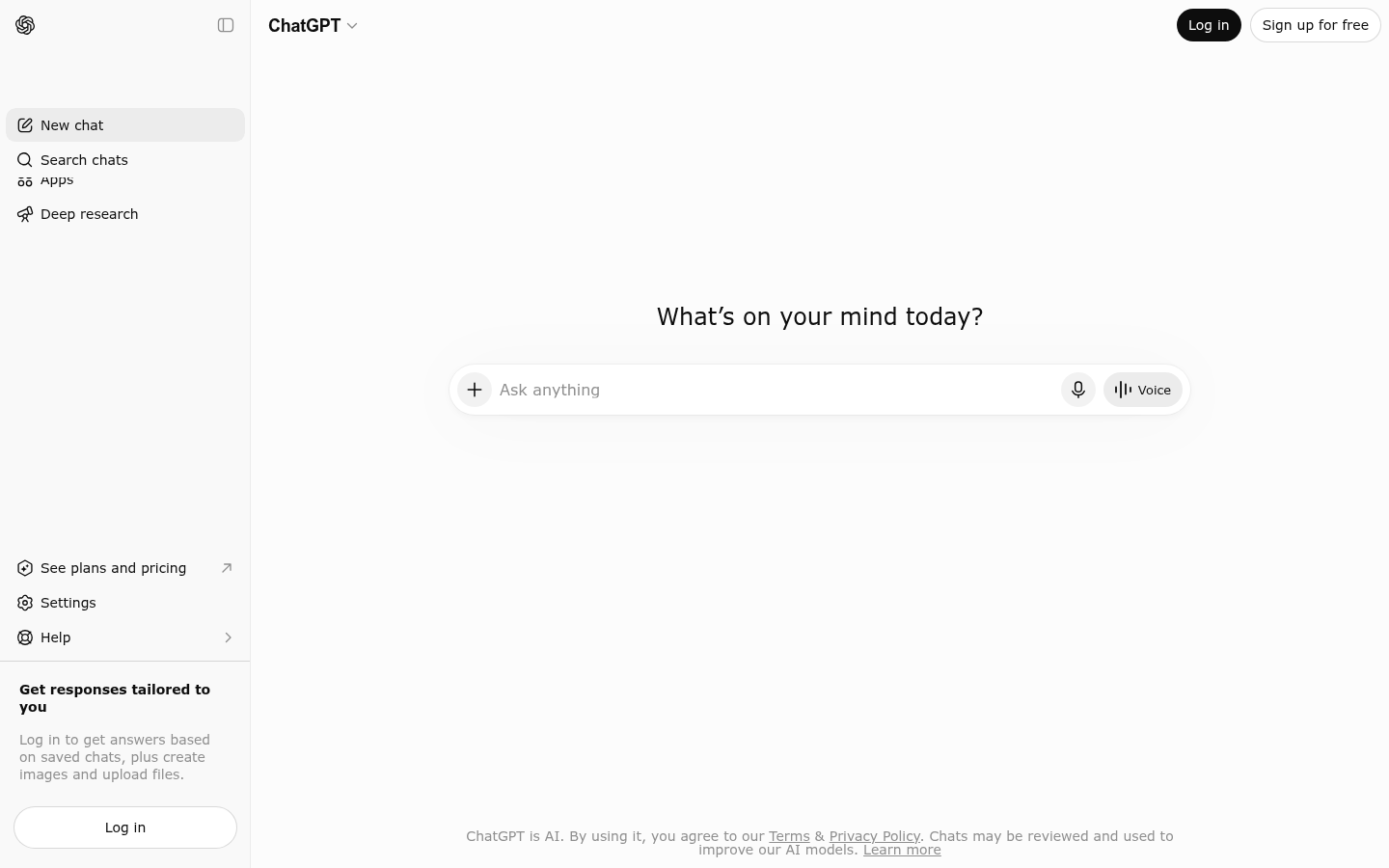
ChatGPT
- Near-zero switching cost for teams already paying for ChatGPT Plus
- Agent mode inherits frontier model upgrades automatically
- Stable, transparently published pricing since 2023
- Agent mode usage is capped even on the $20/month Plus tier
- Heavy autonomous workflows push users toward the $200/month Pro tier
The path of least resistance for existing ChatGPT users, not the most capable agent in this group.
Verdict
Genspark is the strongest general Manus AI alternative on price and output polish, with Skywork as the specialist pick for research-backed reports and decks, and ChatGPT's Agent mode as the low-friction default for teams already paying for Plus. Manus still goes deepest on unattended, multi-app autonomy, which is why it keeps its place in the comparison rather than being fully replaced.
How we tested
We compared Manus AI against three widely cited alternatives using each vendor's published pricing and documentation pages, independent reviews from Vellum, Lindy, and Storyflow, and one live homepage screenshot per product captured directly from the vendor's site in July 2026. Manus's acquisition timeline was verified against Reuters and CNBC reporting from December 2025. This is desk research triangulated across public sources, not a timed hands-on benchmark; we flag that limitation rather than imply lab testing we did not run.